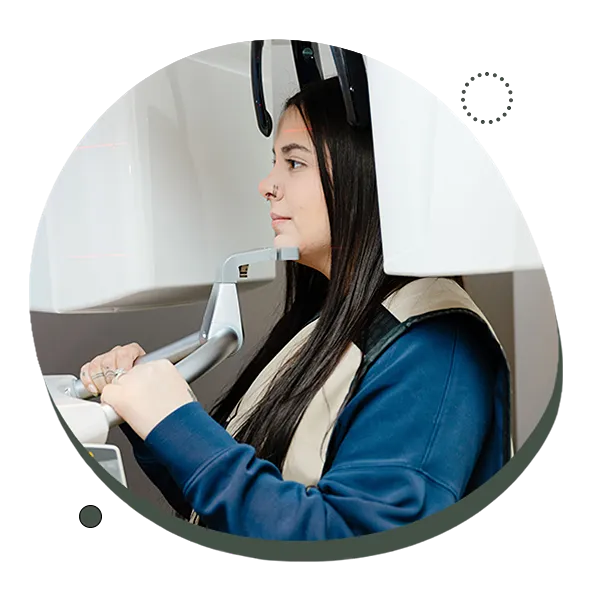
Invisalign and other clear aligner systems are orthodontic treatments used to gradually move teeth into improved alignment. At Dentology Dental, clear aligner treatment may be recommended when concerns such as crowding, spacing, or bite irregularities affect oral function or smile appearance.
This page explains what Invisalign and clear braces are, when they may be recommended, how treatment works, and how aligners are maintained during care.
Invisalign and clear braces refer to orthodontic systems that use a series of clear, removable aligners to gradually move teeth into their intended positions.
Each aligner is custom fabricated and designed to apply controlled pressure to specific teeth. Over time, this sequence of aligners moves teeth incrementally according to a planned treatment progression.
Clear aligners are removable, which allows patients to maintain normal oral hygiene and remove the aligners while eating. Treatment is often considered as part of functional dentistry.
Why Clear Aligner Treatment May Be Recommended
Teeth alignment affects both appearance and function. When teeth are crowded, spaced, or misaligned, it may influence bite stability and oral hygiene.
Clear aligner treatment may be recommended to address:
Crowded teeth
Spacing or gaps between teeth
Mild to moderate bite irregularities
Teeth that have shifted over time
Alignment concerns affecting oral hygiene
Orthodontic treatment recommendations are based on a clinical assessment of tooth position, bite relationship, and overall oral health.
Conditions Clear Aligners May Help Address
Clear aligners may be used to correct several types of orthodontic concerns.
These may include:
Mild to moderate crowding
Gaps between teeth
Overbite or underbite
Crossbite
Teeth that have shifted following previous orthodontic treatment
In some cases, orthodontic alignment may be recommended before other treatments such as veneers, dental crowns, or full mouth restoration to ensure proper tooth positioning.
Signs You May Benefit From Invisalign or Invisible Braces
Clear aligner treatment may be considered when alignment concerns begin to affect oral function or smile appearance.
Common indicators include:
Crowded or overlapping teeth
Gaps between teeth
Difficulty flossing due to tight spacing
Teeth that appear shifted or misaligned
Bite irregularities that affect chewing
A dental examination helps determine whether clear aligner therapy is appropriate and whether additional treatments may be required.
How Invisalign Treatment Is Planned
Clear aligner treatment begins with a comprehensive dental evaluation. Your dentist will assess tooth alignment, bite relationship, and overall oral health.
Diagnostic records may include:
Digital scans or impressions
Photographs of the teeth and bite
Digital imaging to evaluate tooth position
These records are used to develop a customized treatment plan that maps the gradual movement of teeth throughout the aligner sequence.
How Clear Aligners Work
Clear aligner systems use a series of custom trays that are worn over the teeth. Each aligner is designed to move teeth slightly closer to their planned position.
Patients typically wear each aligner for a specific period before progressing to the next set in the sequence. Over time, the series of aligners guides teeth into improved alignment.
Aligners should be worn for most of the day and removed only for eating, drinking beverages other than water, and performing oral hygiene.
Technology Used in Clear Aligner Treatment
Modern orthodontic technology supports accurate planning and monitoring of clear aligner treatment.
Digital scanning technology captures detailed images of the teeth without traditional impressions. These scans are used to create precise aligners and simulate the progression of tooth movement.
This digital approach allows for predictable treatment planning and clear communication of expected outcomes.
Maintaining Oral Hygiene During Treatment
Because clear aligners are removable, patients can maintain their normal oral hygiene routine during treatment.
Daily care typically includes:
Brushing and flossing after meals
Cleaning aligners twice daily
Attending scheduled dental appointments
Maintaining good oral hygiene helps support healthy gums and teeth throughout orthodontic treatment. Regular Check-ups and Cleanings remain a vital part of care.
Retention After Orthodontic Treatment
After teeth have moved into their corrected positions, retainers are typically recommended to help maintain the results.
Teeth naturally tend to shift over time. Retainers help stabilize alignment and preserve the results achieved during treatment.
Your dentist will provide instructions on retainer wear and long-term maintenance.
Invisalign & Clear Braces at Dentology Dental
At Dentology Dental, Invisalign and clear braces are provided through careful assessment, digital planning, and ongoing monitoring throughout treatment. Each plan is developed based on tooth alignment, bite function, and long-term oral health considerations.
If you have questions about improving tooth alignment or are exploring orthodontic treatment options, we invite you to book an appointment to determine whether Invisalign or invisible braces may be right for you.